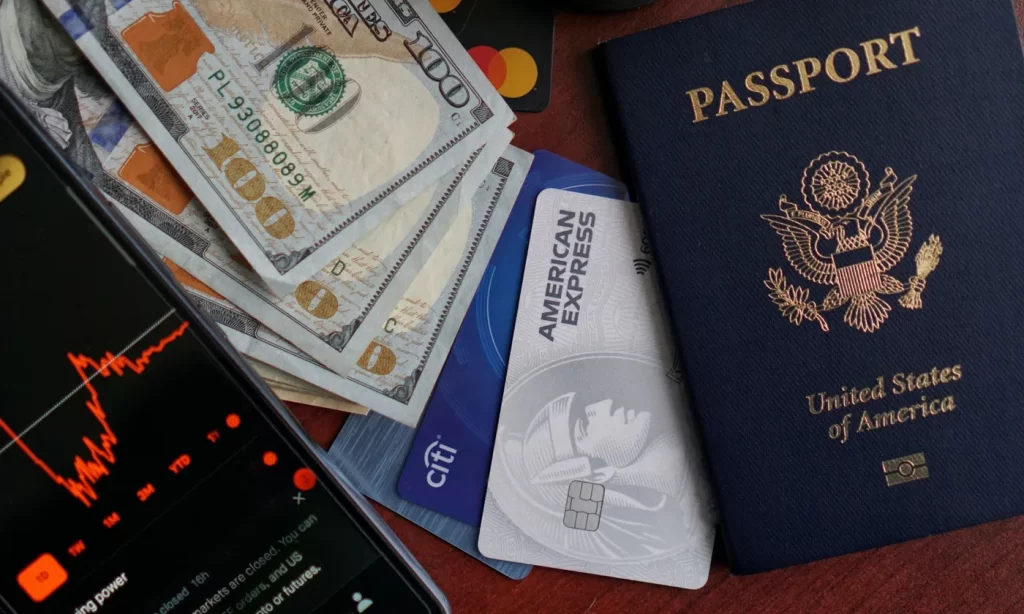
ATMs and cash exchange both help travelers obtain Vietnamese Dong (VND) in Phu Quoc, but they solve different problems. An ATM converts access to your bank account into local cash; a currency exchange converts the foreign banknotes you already carry.

ATM vs cash exchange at a glance
| Question | ATM withdrawal | Cash exchange |
|---|---|---|
| What do you need? | A working card/account | Foreign banknotes |
| Main cost to compare | ATM/operator/bank charges and conversion | Buy rate, spread and any separate fee |
| Main practical limit | Withdrawal and account limits | Currency, note series, denomination and condition |
| Best for | Accessing VND without carrying much foreign cash | Converting cash you already brought |
Which starting point fits your trip?
| Your situation | Start here |
|---|---|
| You mainly travel with cards and do not want to carry much foreign cash | Start with the ATM guide, then compare the full withdrawal cost with your backup options. |
| You already carry foreign cash that you intend to convert | Check the Banknote Guide, the current published rate and the final VND amount. |
| You only need a small amount of VND immediately after landing | Read the airport vs town guide and separate the arrival need from the larger trip-money decision. |
| You are deciding before the trip and do not know which method you will rely on | Start with Should You Exchange Money Before Arriving in Phu Quoc? and Cash or Card in Phu Quoc?. |
This keeps the comparison tied to your trip stage instead of treating ATM and cash exchange as universal substitutes.
Choose an ATM when card access is your main source of money
An ATM can be convenient if you prefer not to carry a large amount of foreign cash. Before relying on it, check your bank’s international-use settings, withdrawal limits, possible issuer charges and what happens if the machine offers a conversion choice.
For the operational details, read Using ATMs in Phu Quoc: Fees, Limits and Safety.
Choose cash exchange when you already carry foreign banknotes
If you brought USD, EUR, KRW, CNY, AUD, SGD, THB, JPY or another accepted currency, cash exchange lets you convert those notes directly into VND. The useful comparison is the current buy rate, any separate fee and the final VND amount for the notes you actually hold.
Check the current published exchange rates and use the quote comparison guide for a like-for-like comparison.
What the cash-exchange option looks like on this Phu Quoc service
This operator publishes three service counters: two in Dương Đông and one in An Thới. The published opening hours are 08:00–22:00, and the public contact number is 0788 636 969. Use the Locations page for the exact addresses before choosing a route.
Those details do not prove that cash exchange is cheaper than an ATM. They give you concrete inputs for the comparison: the published cash rate and timestamp, the distance to a counter, the notes you carry and whether a larger exchange should be confirmed before you travel.
If you have already decided to exchange physical cash and are choosing between provider types, continue with Bank vs Currency Exchange Counter in Phu Quoc.
Banknote condition matters only on the cash-exchange side
An ATM does not inspect the foreign notes in your wallet because you are not giving those notes to the machine. A cash exchange service, however, may need to inspect series, denomination and physical condition before confirming a transaction.
If you bring foreign cash, use the Banknote Guide before traveling.
Do not compare only the headline number
For an ATM, the total cost can involve more than the displayed withdrawal amount. For cash exchange, the rate board can be only one part of the final result. Compare the amount of VND you receive and the total cost of obtaining it.
The spread vs fees guide explains why a rate difference and a separate commission are not the same thing.
Use both methods as backups rather than forcing one answer
A traveler who carries some foreign cash plus a working card has two independent ways to access VND. That can be useful if an ATM limit is inconvenient, a card is temporarily unavailable, or a particular banknote needs additional checking.
Keep the backup separate from your main wallet and avoid carrying more cash than you are comfortable protecting.
If your card strategy includes a multi-currency or travel card rather than a standard bank card, compare that route directly with foreign-cash exchange in Travel Card vs Cash Exchange in Phu Quoc.
Match the method to your trip stage
- Before arrival: decide whether you want a small VND buffer.
- At the airport: prioritize immediate arrival needs rather than automatically converting your whole budget.
- During the trip: compare the cost and convenience of your next ATM withdrawal with exchanging the foreign cash you still hold.
- Before a larger transaction: confirm the current rate, banknote acceptance and any applicable limits.
For timing, read Should You Exchange Money Before Arriving in Phu Quoc?.
ATM vs currency exchange FAQ
Is an ATM always cheaper than exchanging cash?
No. Your bank fees, ATM charges, conversion choices and withdrawal size can change the result. Compare the complete cost.
Is cash exchange always better for a large amount?
Not automatically. Confirm the current quote, banknote acceptance and transaction conditions before relying on a large cash exchange.
Should I bring both a card and foreign cash?
A mixed backup plan can reduce dependence on one access method, but the amount you carry should match your itinerary and personal cash-security comfort.
Also compare cash vs card for everyday spending. That page answers how to pay; this page answers how to obtain VND.