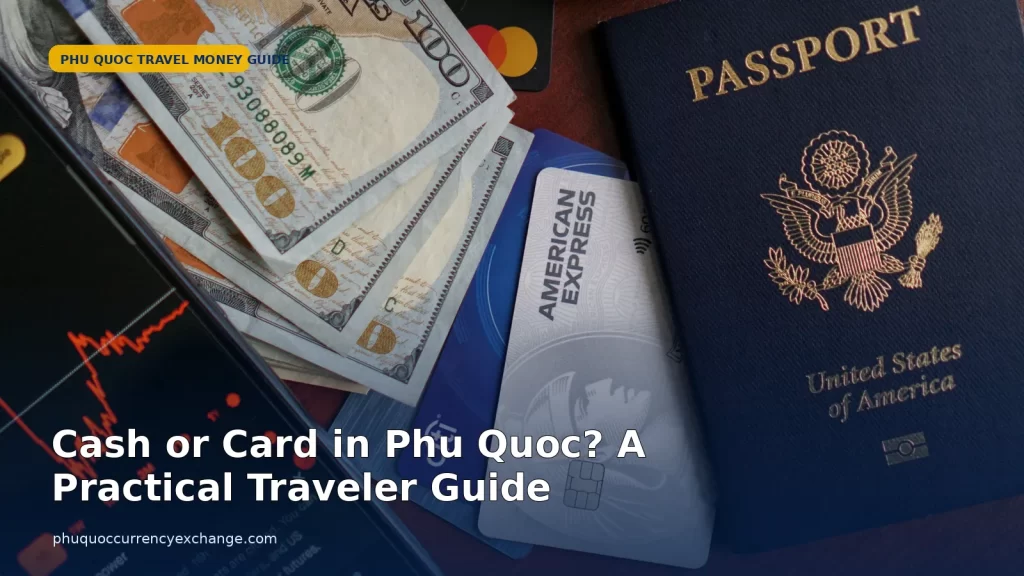
For most visitors, the useful question is not whether Phu Quoc is a “cash destination” or a “card destination.” It is how to split your spending so you can pay comfortably without carrying more cash than you need.
Practical starting point: keep some VND for small or cash-preferred payments, use a card where acceptance is confirmed, and keep a backup payment method separate from your day wallet.
Last source check: 22 September 2026. Vietnam Tourism says cash is commonly used for smaller purchases and street vendors, while many established businesses accept major cards. That national guidance is a baseline, not a guarantee that a specific Phu Quoc merchant will accept your card.
Choose by expense type, not by one rule for the whole trip
Small purchases and cash-preferred situations
Keep enough VND for the purchases you expect before your next reliable ATM, card payment or exchange opportunity. Markets, street vendors and small transactions are the situations most likely to make a working-cash buffer useful.
Hotels, tours, restaurants and larger businesses
Card acceptance is more common at established businesses, but confirm the payment method before depending on it. Your card issuer can still apply foreign-transaction, cash-withdrawal or other account-specific fees.
Transport, independent providers and uncertain payments
If you do not know whether a driver, activity provider or small business accepts your card, treat that expense as uncertain until you confirm. A small VND buffer can prevent one uncertain payment from forcing a rushed ATM or exchange decision.
Three common Phu Quoc payment scenarios
These scenarios describe payment structure, not average prices or recommended budgets.
Mostly prepaid resort stay
If accommodation, airport transfer and major activities are prepaid, you may only need working cash for small purchases and backup. Keep a card available for confirmed card-friendly expenses and avoid converting the whole trip budget at once.
Mixed cash-and-card itinerary
If your trip combines restaurants, tours, markets, taxis or independent stops, split the remaining expenses into likely-card, likely-cash and uncertain buckets. Use the How Much Cash Should You Carry in Phu Quoc? method to turn that list into a working-cash amount.
Cash-heavy day
If you expect many small cash payments, increase the working-cash amount for that day rather than carrying the same high amount every day of the trip. Keep reserve cash and a second card separately when practical.
Card payments: check DCC before you approve
A terminal or ATM may offer to convert the transaction into your home currency. Visa says a DCC offer should display the amount in local and cardholder currency, the exchange rate and any additional fee or markup, and should let the cardholder accept or decline the conversion.
Practical rule: do not choose the familiar-currency option automatically. Compare the displayed conversion terms with the costs that apply when the transaction stays in VND.
Read Dynamic Currency Conversion in Phu Quoc before relying on a home-currency prompt.
ATM withdrawals are a separate cost decision
An ATM can be convenient when you need more VND, but total cost can include an ATM-operator surcharge, your issuer’s ATM or foreign-transaction fee, a per-transaction withdrawal limit and a possible DCC offer. Review the Phu Quoc ATM guide for local ATM leads and current operator-fee examples.
If you bring foreign cash
Foreign cash can be a backup if you already carry suitable banknotes, but the transaction depends on the exact currency, denomination, series and condition. Check the Banknote Guide before making a special trip with old, marked or damaged notes.
This service currently publishes three exchange counters in Phu Quoc, with public phone 0788 636 969 and published hours 08:00–22:00 daily. Confirm the current rate, counter and transaction availability before traveling, especially for a larger or unusual transaction.
A simple two-wallet setup
- Carry only the VND you expect to use soon.
- Keep a backup card or reserve cash separately.
- Do not expose the full trip budget every time you pay.
- Reassess after the first day instead of converting or withdrawing too much at once.
- Reduce new cash transactions as departure approaches.
Cash-or-card decision checklist
- Remove expenses that are already prepaid.
- Confirm which remaining expenses accept cards.
- Keep VND for cash-only or uncertain payments.
- Check your own card’s international purchase and ATM fees.
- Read any DCC screen before approving the transaction.
- Keep a second payment method separate.
- For foreign cash, verify banknote condition and the published rate before visiting.
Official source and next steps
- Vietnam Tourism — Currency and payments in Vietnam: national guidance on cash, cards and ATMs.
- Visa — Dynamic Currency Conversion: disclosure and cardholder-choice guidance.
- Travel Card vs Cash Exchange in Phu Quoc
- Phu Quoc Travel Money Guide
Freshness note: payment acceptance, ATM fees and card-provider charges can change. Confirm the merchant, ATM operator and your own issuer when the decision depends on a specific fee or payment method.