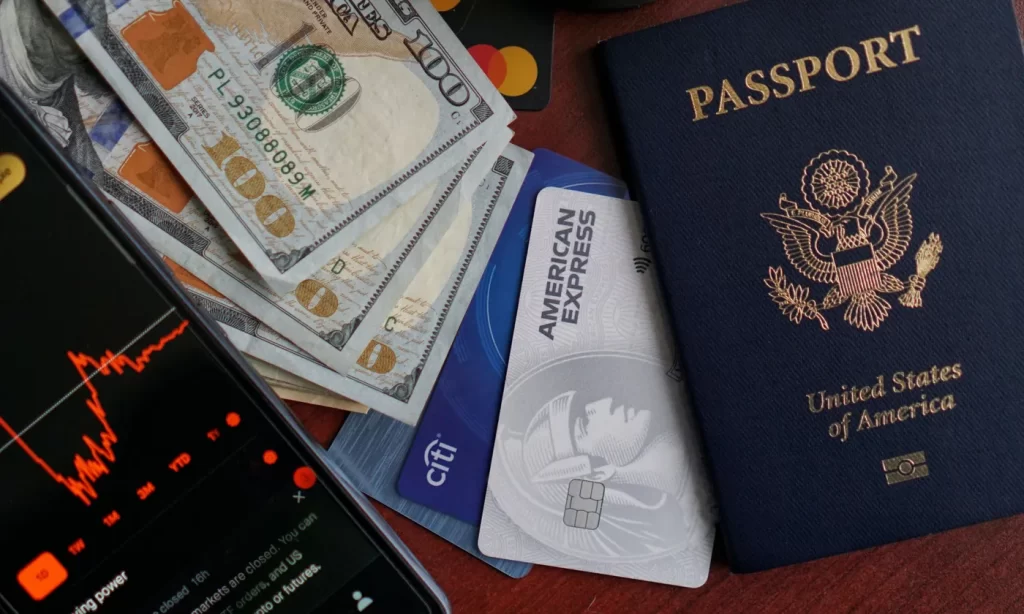
Before exchanging foreign cash in Vietnam, check which denominations you are carrying and how many notes you have. A traveler with five large notes and one with fifty smaller notes may hold the same total value, but the physical stacks need different counting and verification.
Quick answer: Sort notes by currency and face value, count each group, record the subtotal, and keep old-series or damaged notes separate. Use the issuing central bank to identify genuine denominations. A note being valid in its home country does not guarantee that an exchange counter in Vietnam will accept it.
Common banknote denominations by currency
These are issuer reference lists, not a list of denominations guaranteed to be accepted in Phu Quoc. Check the actual note and series using the linked official source.
| Currency | Issuer-referenced banknote denominations | Official source and notes |
|---|---|---|
| USD — US dollar | $1, $2, $5, $10, $20, $50, $100 | U.S. Currency Education Program; denominations currently issued by the Federal Reserve |
| EUR — euro | €5, €10, €20, €50, €100, €200 | European Central Bank; the first-series €500 remains legal tender even though no €500 Europa-series note is issued |
| KRW — South Korean won | ₩1,000, ₩5,000, ₩10,000, ₩50,000 | Bank of Korea; check individual security features |
| JPY — Japanese yen | ¥1,000, ¥2,000, ¥5,000, ¥10,000 | Bank of Japan; the ¥2,000 note and different issue years may look unfamiliar; new ¥1,000/¥5,000/¥10,000 notes began in 2024 |
| AUD — Australian dollar | A$5, A$10, A$20, A$50, A$100 | Reserve Bank of Australia; earlier issues can retain legal-tender status in Australia |
| GBP — British pound | £5, £10, £20, £50 | Bank of England; current Bank of England polymer notes may show Elizabeth II or Charles III |
Other currencies, including SGD and THB, have their own designs and note values. If you hold those currencies, refer to the site’s SGD and THB pages as travel context, and check the issuing authority before drawing conclusions about a specific note.
Does a valid banknote have to be accepted in Vietnam?
No. An issuer can confirm a note’s denomination, series and legal-tender status in its own jurisdiction. That does not require a bank or exchange service abroad to buy every note. Acceptance can depend on the currency, series, denomination, condition, the provider’s permitted activities and its current operating procedures.
For example, the ECB says the first-series €500 note remains legal tender. This does not mean a Phu Quoc counter promises to exchange a €500 note. Similarly, older U.S., Australian or Japanese designs may remain valid at home while requiring additional checking abroad. See the Old-Series Banknotes Guide for the separate series question.
Before making a special trip, tell the service what note you have and ask whether that particular denomination and series is handled. Avoid assuming that a high face value automatically earns a better rate.
Count each denomination: a simple worksheet
The most useful list has four columns. Write one line for each currency and note value; do not mix USD, EUR and KRW into one arithmetic total.
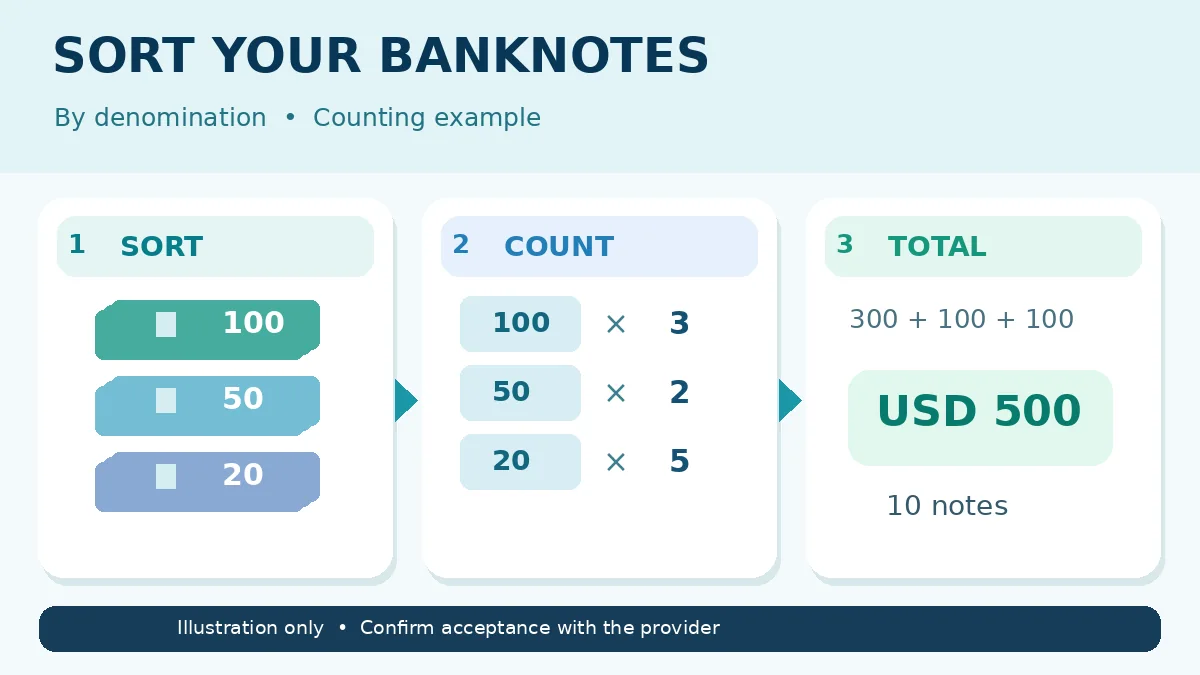
| Currency | Face value | Number of notes | Subtotal |
|---|---|---|---|
| USD | 100 | 3 | USD 300 |
| USD | 50 | 2 | USD 100 |
| USD | 20 | 5 | USD 100 |
| USD total | — | 10 notes | USD 500 |
Worked example: 3 × 100 + 2 × 50 + 5 × 20 = 500 USD across 10 notes. This is a hypothetical counting example, not a live exchange-rate quote. To convert that amount to VND, you would still need the provider’s confirmed cash-buying rate and any fees. See Buy vs Sell Exchange Rates.
For your own notes, use the same four-column method: currency → face value → quantity → subtotal. Write the total value and the total number of pieces separately.
What about small notes, large notes and mixed series?
- Many small notes: group each face value and count the pieces carefully. A large stack may take longer to verify, so ask before visiting.
- A few high-value notes: counting is shorter, but do not assume a rate, acceptance or special treatment from denomination alone.
- More than one series: separate older and newer designs within the same denomination; the old-series guide covers the validity question.
- Damaged or marked notes: keep them apart and ask about their condition separately. The damaged-banknotes guide covers that issue.
Do not mix unusual notes into a clean-note subtotal without marking them. If the provider does not accept one note, you can update that subgroup instead of recounting everything.
Before visiting a counter with a large or unusual stack
- Sort by currency, then denomination, then series or condition when needed.
- Write each quantity and subtotal; check the arithmetic once more.
- Ask whether the provider handles your currency, denominations and unusual notes. For a large amount, also ask about available VND and timing.
- Confirm the cash-buying rate, any separate charges and the expected final VND.
- Verify the current counter and contact details through the locations list and Contact page before carrying the notes to an address.
For a larger exchange, Exchanging a Larger Amount of Cash in Phu Quoc covers the questions to ask about cash availability and documents. A posted rate or issuer banknote page is not a guarantee of counter inventory, acceptance or authorization.
A short message to confirm your denomination mix
Hello. I want to exchange [currency] cash, approximately [total amount]. I have [number × face value] notes, including [any older or damaged notes]. Can you confirm whether these denominations are accepted, any note-specific adjustments or fees, the cash-buying rate, the final VND and which counter I should visit?
If you have multiple currencies, list them separately. Ask the provider to clarify any documents required for your transaction, using its verified contact channel rather than sending identity documents to an unknown person.
Frequently asked questions
Are larger banknotes always easier to exchange?
No. A higher denomination can mean fewer pieces to count, but the note’s series, condition and the provider’s actual policy still matter. Ask before assuming acceptance.
Can I exchange an older €500 note?
The ECB says the first-series €500 remains legal tender in the euro area. That does not guarantee a bank or currency exchange service in Vietnam will buy it. Confirm the exact note and local acceptance first.
Is the Bank of Japan’s ¥2,000 note invalid because it is uncommon?
No. The Bank of Japan includes ¥2,000 among its issued banknotes. Check the bank’s official note information, then separately ask whether your chosen exchange provider handles that note.
Do I need a spreadsheet to count my notes?
No. A simple list of face value, quantity and subtotal is sufficient for preparation. Count the actual banknotes again at the transaction point.
Sources, limits and related guides
Reviewed 26 October 2026. Issuer facts come from the U.S. Currency Education Program, European Central Bank, Bank of Korea, Bank of Japan, Reserve Bank of Australia and Bank of England. These pages describe issued denominations or note status; none confirms which foreign notes a particular Phu Quoc counter will accept today. No provider-specific denomination acceptance matrix has been independently verified for this article.
For broader questions about which notes tend to require extra checking, continue with Which Banknotes Are Easier to Exchange in Vietnam?. Always verify the specific provider’s conditions before a transaction.